Loading our process

8 min read
Every machine that reaches you has been stripped down, tested, repaired where it needed it, and graded honestly for what it is — then backed for twelve months.
The same process every time, for every laptop — whether it's a £149 Chromebook or a £1,499 MacBook Pro.
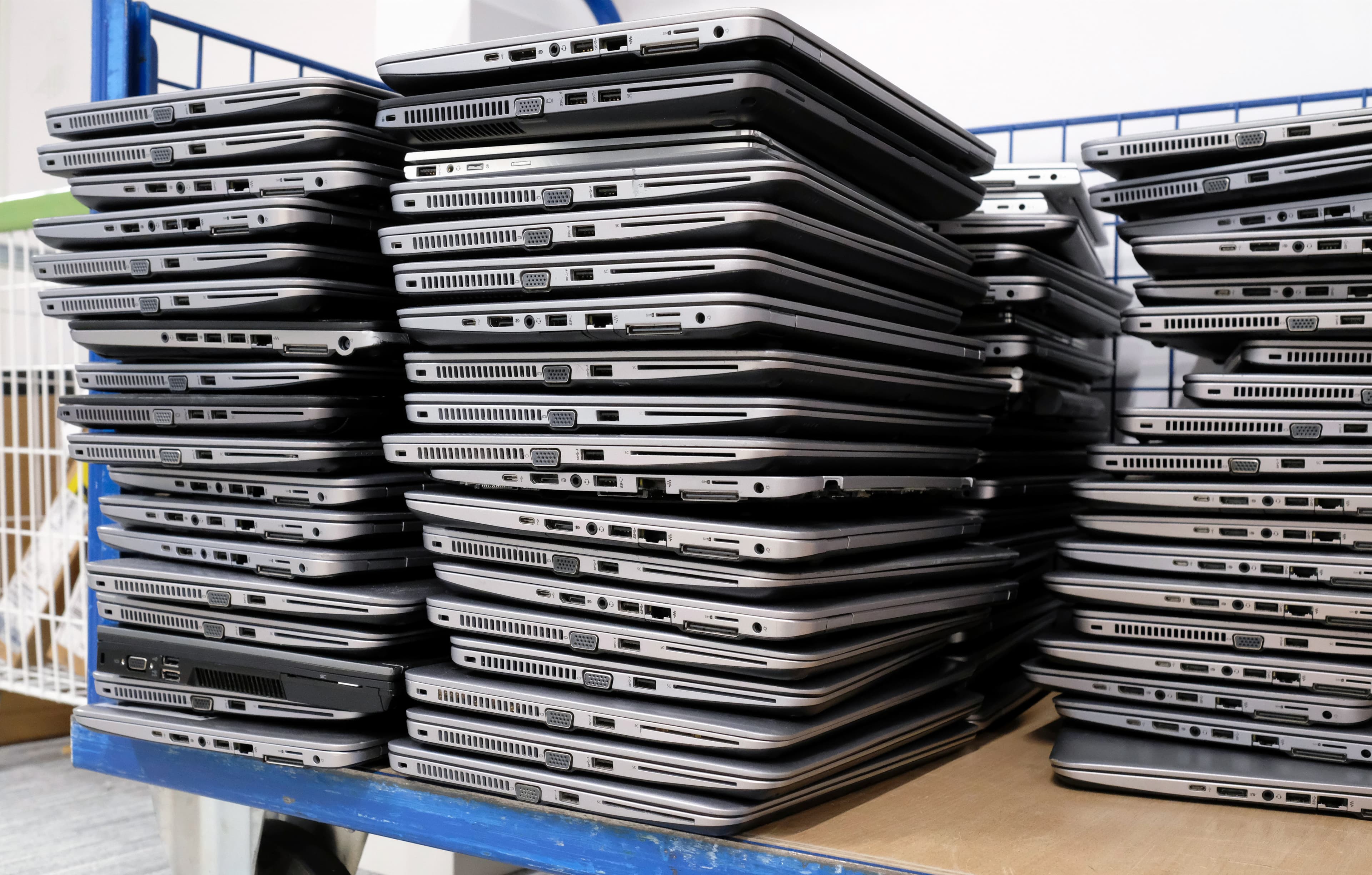
Machines come from corporate fleets and established UK trade partners — business-grade hardware built for years of daily use, bought in known condition from a known source rather than picked up as job-lot stock of unclear origin.
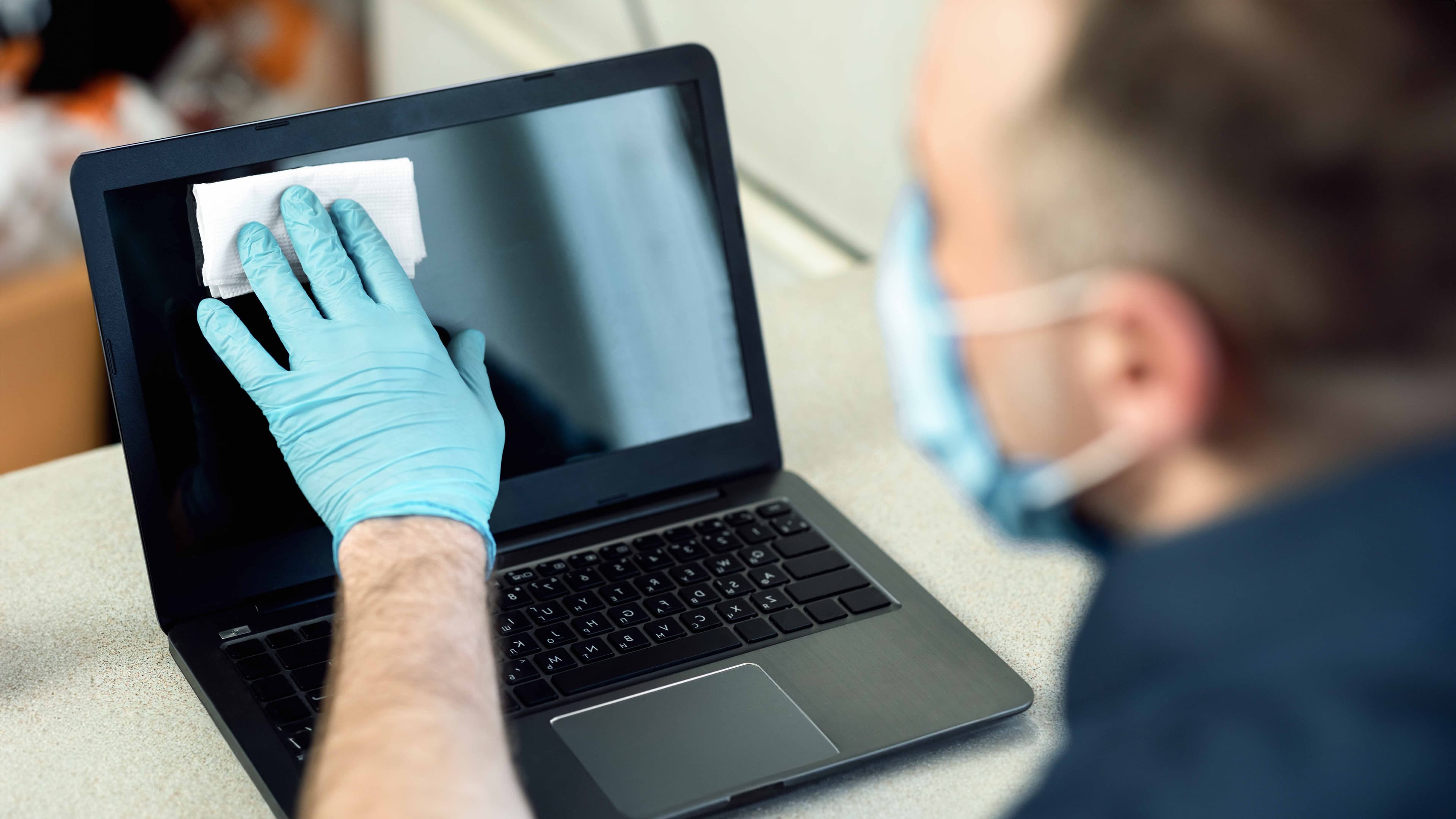
Every laptop goes on the bench for a full diagnostic pass: battery capacity, storage and memory under load, the display, the keyboard and trackpad, every port, wireless, camera and speakers, and thermals. A machine that fails any one of them goes back to the bench — it does not go on sale.
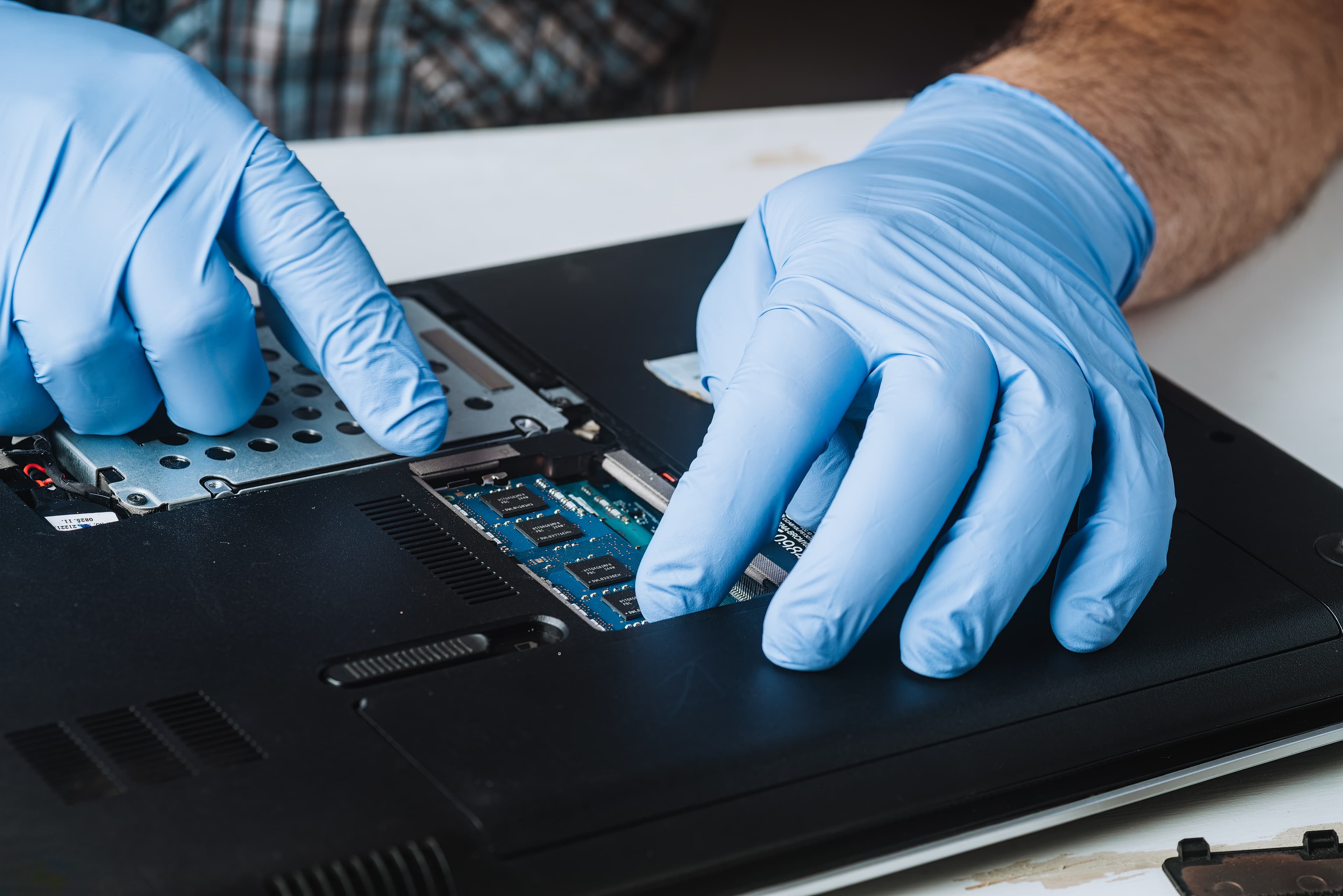
Anything below standard is replaced rather than nursed along — worn batteries, tired drives, damaged keyboards and screens. Fans are cleaned and thermal paste renewed, and the drive is securely wiped before a machine goes any further.
Each machine is then graded A, B or C for cosmetic condition, and photographed as it actually is. The grade sets the price and nothing else: every grade has passed the same tests and carries the same warranty.
A clean OS install, a final quality pass, then it ships — free tracked UK delivery, thirty days to send it back if it isn't right, and twelve months of warranty from the day it arrives.
If a single check fails, the machine goes back to the bench — it never goes on sale.
Charge capacity measured against the original spec. Worn cells are replaced, not passed on.
Drive health and read/write speeds benchmarked, then securely wiped before anything else.
Full-capacity memory test under sustained load, so faults that only show up warm are caught.
Checked for dead pixels, backlight bleed and uneven brightness across the whole panel.
Every key pressed and every gesture tested by hand — there is no shortcut for this one.
USB, HDMI and audio each tested with a real device; Wi-Fi and Bluetooth paired and verified.
Recorded and played back on the bench, so a call works on the first day you need it to.
Fans cleaned, thermal paste renewed where needed, then stress-tested to check it holds.
The grade describes cosmetic condition and nothing else. Every grade has passed the same inspection and carries the same 12-month warranty.
Like new. Minimal to no signs of previous use — no visible scratches or marks on the body or screen.
Light cosmetic wear. Minor scratches or scuffs that are barely noticeable at a normal viewing distance.
Noticeable cosmetic wear. Visible scratches, scuffs or marks — purely cosmetic, with no impact on performance.
Most of a laptop's lifetime carbon footprint is spent before anyone switches it on — it goes into building the thing. Renewing one avoids nearly all of that.
Renewing a machine skips the mining, smelting and assembly that dominate a new laptop's footprint — by far the largest part of what it costs the planet.
A machine with years of good work left in it is worth more repaired than replaced. That is the whole business, not a side effect of it.
Every laptop that goes back into service is one that didn't go to the skip, and one fewer that had to be built from scratch to take its place.
Every machine ships with free tracked UK delivery, thirty days of free returns and a 12-month warranty.
8 min read
Every machine that reaches you has been stripped down, tested, repaired where it needed it, and graded honestly for what it is — then backed for twelve months.
The same process every time, for every laptop — whether it's a £149 Chromebook or a £1,499 MacBook Pro.
Machines come from corporate fleets and established UK trade partners — business-grade hardware built for years of daily use, bought in known condition from a known source rather than picked up as job-lot stock of unclear origin.
Every laptop goes on the bench for a full diagnostic pass: battery capacity, storage and memory under load, the display, the keyboard and trackpad, every port, wireless, camera and speakers, and thermals. A machine that fails any one of them goes back to the bench — it does not go on sale.
Anything below standard is replaced rather than nursed along — worn batteries, tired drives, damaged keyboards and screens. Fans are cleaned and thermal paste renewed, and the drive is securely wiped before a machine goes any further.
Each machine is then graded A, B or C for cosmetic condition, and photographed as it actually is. The grade sets the price and nothing else: every grade has passed the same tests and carries the same warranty.
A clean OS install, a final quality pass, then it ships — free tracked UK delivery, thirty days to send it back if it isn't right, and twelve months of warranty from the day it arrives.
If a single check fails, the machine goes back to the bench — it never goes on sale.
Charge capacity measured against the original spec. Worn cells are replaced, not passed on.
Drive health and read/write speeds benchmarked, then securely wiped before anything else.
Full-capacity memory test under sustained load, so faults that only show up warm are caught.
Checked for dead pixels, backlight bleed and uneven brightness across the whole panel.
Every key pressed and every gesture tested by hand — there is no shortcut for this one.
USB, HDMI and audio each tested with a real device; Wi-Fi and Bluetooth paired and verified.
Recorded and played back on the bench, so a call works on the first day you need it to.
Fans cleaned, thermal paste renewed where needed, then stress-tested to check it holds.
The grade describes cosmetic condition and nothing else. Every grade has passed the same inspection and carries the same 12-month warranty.
Like new. Minimal to no signs of previous use — no visible scratches or marks on the body or screen.
Light cosmetic wear. Minor scratches or scuffs that are barely noticeable at a normal viewing distance.
Noticeable cosmetic wear. Visible scratches, scuffs or marks — purely cosmetic, with no impact on performance.
Most of a laptop's lifetime carbon footprint is spent before anyone switches it on — it goes into building the thing. Renewing one avoids nearly all of that.
Renewing a machine skips the mining, smelting and assembly that dominate a new laptop's footprint — by far the largest part of what it costs the planet.
A machine with years of good work left in it is worth more repaired than replaced. That is the whole business, not a side effect of it.
Every laptop that goes back into service is one that didn't go to the skip, and one fewer that had to be built from scratch to take its place.
Every machine ships with free tracked UK delivery, thirty days of free returns and a 12-month warranty.